
On Autism and Writing
Cat's Curios #3

Be aware, dear reader. Autism is about this month.
Luckily, as an autistic person, I’m already aware and prepared. I’ve got my stims down pat. Noise cancelling headphones blasting heavy rock far more tolerable than a sudden cough or baby screaming. Eyes ready to roll at privately educated journalists and politicians complaining that people like me (talkative bitches with opinions) simply aren’t autistic enough. A different diagnosis is needed for us. Hysteria, perhaps.
Yes, even with the unfortunate capability of paying tax and deciding what to meal prep every week, autism can still be disabling for me. What I will always be grateful to autism for, however, is how it’s affected my writing.
A World of No Imagination?
For most of autism’s history, we weren’t believed to exist. Then, once the science caught up, we were diagnosed with the wrong symptoms.
Popular science (and pop culture) has often portrayed autistic people as real-life Spocks, preferring the cold reality of facts and logic. Note that word cold; while Spock was presented as multi-faceted and likeable despite his different way of thinking, autistics are often seen as strange and standoffish, with no capacity for creativity, or even the ability to appreciate it.
On the contrary, autistic people like me have always found comfort and community through escaping the real world and entering another. The most devoted fans of a franchise will often be the autistic ones.
Unfortunately this creates another misconception. Because of our excellent memories and often using echolalia to develop communication skills, autistic people are known to repeat lines and phrases from their favourite shows/books/songs, etc. I myself am partial to communicating via memes.
Sadly, this isn’t seen as autistic people connecting with a text, but rather mindlessly echoing something that a nice, ‘normal’ person created. Brain empty, no thoughts.
So can we autistics create worlds of our own?
Obviously, Yes
I’ve been writing since I was five years old. There’s a quiet that comes over my mind when the words are flowing proper, or even when I’m just reading over what I’ve done. Like with fandom, there’s another world to escape to. Words on paper or screen can’t assault you with sensory overload. There’s no real person opposite you to decipher (just some very stubborn characters who keep. Changing. The. Plot). There’s mistakes, yes, but I can try over and over again to make it better.
Writing isn’t just a balm on my autism, however. Seeing the world differently has helped me to become a better writer, and to continue improving. Here’s how:
How Autism Helps This Writer
Sensitive hearing for overhearing inspiring conversations and understanding dialogue.
Becoming an expert observer of human nature in an attempt to fit in.
Intense interest in obscure topics to inspire stories and add oddly specific details (ask me how much I know about nineteenth and twentieth century country house servants).
Less of a social filter, turning that ‘man, wouldn’t that be messed up?’ thought into a full-blown short story.
A strong memory to keep details consistent throughout a novel.
I don’t write despite being autistic. I write because of it.
What I’m…
Reading: Jay Kristoff’s Empire of the Dawn and the Dracula Scrapbook. I’ve got vampires on the brain this month. Speaking of which…
Listening: The song that should’ve won Best Original Song at the Oscars.
Watching: Since we’re on a roll, I might as well re-watch the 1977 adaptation of Dracula, which you can watch for free on YouTube.
And, from this month onwards, what I’m…
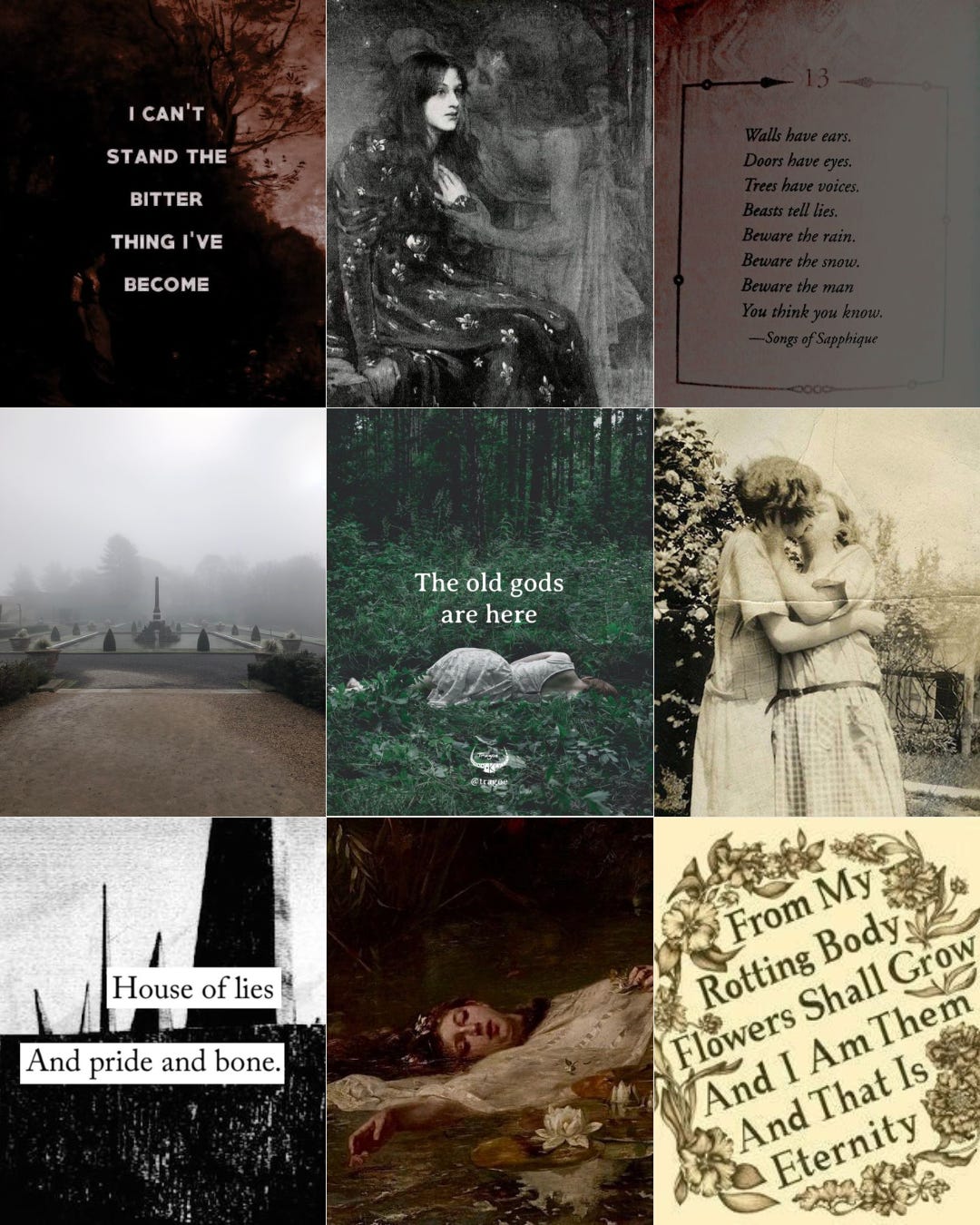
Writing: Returning to the first draft of a standalone YA Gothic novel I’ve been writing on-and-off since 2023. Love! Death! Lesbians!
🐈⬛🐾
I’ve GOT to see Sinners!